When students join a WISCURDS project, they often arrive with ideas about what they hope to gain from the experience: a stronger resume, a letter of recommendation, maybe a publication. Less often do they fully anticipate how the work will reshape the way they think about their field, their collaboration, and themselves.
Faculty mentors, too, report finding surprises in the experience. They describe students who bring fresh perspectives, ask questions that reframe assumptions, and model a kind of curiosity that can help energize research efforts.
A few of our WISCURDS student researchers volunteered to share their stories online. These students hail from different majors, backgrounds, corners of campus, and areas of the world. What they share is a willingness to show up, leap into new learning challenges and contexts, and stay honest about what they don’t yet know. Their mentors, in turn, share a conviction that guiding undergraduates through important research questions and tasks is among the most rewarding parts of academic life.
Ellison Xu

- Sophomore | Mathematics + Music Performance (Harp)
- Project: Benchmarking Predictive Models to Guide Referrals to Nephrology Clinics
- Mentor: Dr. Amy Cochran, Assistant Professor, Departments of Population Health Sciences and Mathematics; Data Science Institute Affiliate
Ellison Xu’s path to WISCURDS started with two things: a desire to grow personally and a desire to help others. Ellison was drawn to WISCURDS for an opportunity to apply her skills outside the classroom. She says, “I was specifically drawn to my project because of its positive impacts on the community.”
Under the mentorship of Dr. Amy Cochran, Ellison hopes to learn how predictive models for chronic kidney disease can help professionals decide which patients may need referral to specialty care while providing more complete technical training for physicians and medical providers, who may reference risk predictive models. Helping physicians better understand these decisions is important because early referrals can strain clinic capacity, while delayed referrals can worsen outcomes. Core medical school curriculum does not include training on data science or machine learning predictions.
Ellison wants others who are considering WISCURDS to know, “You do not need to be at an ‘expert’ level to apply. The most important thing is that you have a passion to learn and drive to improve.”
Long term, Ellison is considering a full range of career options, but she is most interested in exploring the intersection between AI and healthcare. “This project is an extremely valuable experience for me, as it is allowing me to explore a possible career option,” she says. “I am very interested in the intersection between AI and health, and my project explores predictive models for chronic kidney disease. Additionally, this project allows me to build important skills, both technically and socially, as I am working in a small team, analyzing real world data sets.”
Mihir Narayan
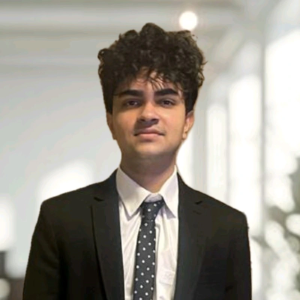
- Junior | Statistics + Computer Sciences
- Project: Benchmarking Predictive Models to Guide Referrals to Nephrology Clinics
- Mentor: Dr. Amy Cochran, Assistant Professor, Departments of Population Health Sciences and Mathematics; Data Science Institute Affiliate
Mihir Narayan is also working with mentor Amy Cochran. As a double major in computer sciences and statistics, he had built strong technical foundations through coursework, but he felt a growing interest in doing more. Like many students, he instinctively knew the problems most worth solving weren’t the ones with tidy answers at the back of a textbook.
The translational nature of Mihir’s project offers an opportunity to produce a real and impactful product. “Coursework in CS and statistics gives strong foundations, but I was craving problems where the stakes actually mattered, and where I had to go out of my way to think critically and delve deeper into interesting domains where I could apply my data skills,” he says. “Undergraduate research felt like the right way to bridge that gap while I still had the time and a support structure to take risks and learn deeply. ”
That willingness to step into unfamiliar territory has shaped how Mihir approaches this work. “Research teaches things that coursework can’t,” Mihir says. “Working on an open-ended problem with no definitive answer forces structural, methodical thinking that doesn’t come from problem sets or exams. This is an extremely valuable skill that will benefit me in anything I take up in the future.”
Mihir is quick to credit the people around the project. Collaborating with others who care deeply about the same problem, and knowing the work has real potential to make a difference, has made the WISCURDS experience hard to replicate in other settings on campus.
After graduating in spring 2027, Mihir plans to pursue graduate school and a career in data science or AI and machine learning engineering. Ideally, he seeks a role where the work carries real-world consequences. The path from WISCURDS to that ambition feels, to Mihir, like a direct line.
For students considering a WISCURDS application, Mihir’s advice is straightforward: don’t wait until you feel fully prepared. “Most people aren’t, and that’s fine,” Mihir says. “Look for a project that genuinely interests you, not just one that looks good on a resume. And do a little homework beforehand, because even a basic understanding of the problem shows you’re serious and helps you hit the ground running.”
When Mihir isn’t working through research problems or coursework, you might find him at a Rubik’s cube speed-solving competition. This Rubik hobby, come to think of it, shares more with research than one might think: pattern recognition, spatial reasoning, and the quiet conviction that with enough practice, you can always get faster.
Haroon Quddus

- Senior | Computer Sciences + Data Science
- Project: EasyVizAR Augmented Reality Object Detection
- Mentor: Dr Suman Banerjee, Professor, Computer Sciences
Haroon Quddus came to WISCURDS with the opposite problem of most applicants: he had plenty of technical skill and not enough context for how to apply it. Like many students double majoring in computer sciences and data science, Haroon could build a classifier in his sleep. “I was looking to gain some hands-on experience where I could apply the skills I already have and learn how to pick up new technologies quickly, while contributing to meaningful projects,” he says.
His project with Dr. Suman Banerjee involves developing, enhancing, and researching augmented reality system designed to enhance situational awareness and collaboration for first responders in indoor scenarios.
For others considering an application to WISCURDS, Haroon says, “Be willing to try and learn new things, because you might fall into love with something you never expected.”
After graduation, Haroon hopes to to pursue a career related to software development or machine learning. He credits WISCURDS with his “learning new technologies and tools that I could apply when I enter the workforce.” And as a bonus, he says, “I have met many great people here who I can learn from, network with, and stay connected with as I pursue my career.”
Vincent Lanzito

- Junior | Mathematics + Computer Sciences
- Project: EasyVizAR Augmented Reality Object Detection
- Mentor: Dr. Suman Banerjee, Professor, Computer Sciences
Vincent Lanzito reccenly shared via LinkedIn that his WISCURDS project involves developing an augmented reality system designed to enhance situational awareness and collaboration for first responders in indoor scenarios. The project integrates AR head-mounted displays, computer vision, and edge computing to provide real-time navigation cues, shared maps, and secure data exchange across responder teams.
As someone who seeks “a job that involves a good bit of math and programming,” Vincent Lanzito is a classic fit for WISCURDS. “This project gives me hands-on experience working with real-time data and thinking about system constraints,” he says. “It helps me connect theory to practical problem-solving, which I know will be valuable no matter what path I choose.”
When considering WISCURDS as an option, Vincent shared how he wanted to learn despite uncertainties about project specifics. “I wanted to see how the skills I’m learning could be applied outside the classroom,” he says. “I didn’t know which project I’d be placed on when I applied to WISCURDS, but I was excited by the idea of working on something with a real impact.”
For other aspiring WISCURDS students, Vincent’s advice is, “Just apply, even if you’re not sure you’re fully qualified.” He echoes a theme we often hear from WISCURDS students: “Regardless of your experience, there’s going to be a lot of unfamiliar things, but being willing to learn goes a long way.”
Diveesha Vanchireddy
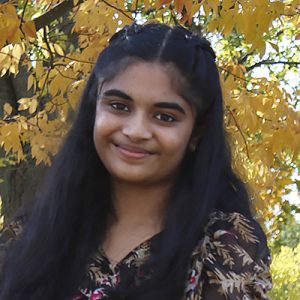
- Junior | Data Science with a certificate in Economic Analytics
- Project: Connecting Coded Data to Social Network Analysis (SNA) Data
- Mentors: Dr. Rich Halverson, Professor, Educational Leadership and Policy Analysis; Dr. Caleb Probst, Research Associate, Wisconsin Center for Education Research
“I wanted to go beyond what I was learning and apply it to real-world problems,” says Diveesha Vanchireddy, a WISCURDS student researcher studying data science and economic analysis. “Research allows me to think critically, explore open-ended questions, and contribute to work that has a meaningful impact.”
That drive to do more, ask hard questions, and work through uncertainty is precisely what the WISCURDS program is designed to cultivate. Diveesha and her WISCURDS teammates have set an ambitious schedule for their work, as they aim to build new analytical tools for the CALL/ECL project at the Wisconsin Center for Education Research. This multi-year project studies urban school district efforts to prepare equity-centered school leaders, and these tools will enable researchers to use social network analysis, natural language processing, and large language models to analyze five years of qualitative data.
Diveesha’s journey to WISCURDS offers a practical lesson for students who may feel they need to wait for the right moment or the right credentials. Early in her undergradaute career, before finding WISCURDS, she approached a prospective faculty mentor for a research opportunity. “I got my first research assistantship by just asking for a coffee chat and talking about relevant skills,” she says.
Her advice to prospective WISCURDS applicants is characteristically direct: be curious, be proactive, and don’t let a perceived gap on your resume become a reason to stay on the sidelines. “Don’t hesitate to reach out, ask questions, and express genuine interest, even if you feel like you don’t meet every qualification,” she says. “Being willing to learn, contribute, and engage thoughtfully goes a long way.”
Diveesha envisions a career built around data-driven problems. “I’m particularly interested in roles that combine analytical thinking, collaboration, and real-world application,” she says.
The WISCURDS experience has sharpened more than Diveesha’s technical skills. “It has given me hands-on experience working with data, communicating findings, and collaborating with a team,” she says. “These experiences are preparing me to approach future challenges with confidence and a structured, research-oriented mindset.”
A Note to Prospective Students
The WISCURDS program is organized by the Data Science Institute at the University of Wisconsin–Madison and is open to all undergraduate students regardless of major. Applications are reviewed on a rolling basis. Visit the DSI website to learn more and apply, or email wiscurds@datascience.wisc.edu with questions. Follow the Data Science Institute on LinkedIn for updates about the program and other opportunities.